
SUCCESS STORY
Novel Saboted Small Arms Ammunition
Industry
Defense & Military
Client
ARDEC (U.S. Army Armament Research, Development and Engineering Center)
Tech
Novel Sabot Design
Dev Time
6 Months
Release Date
November 5, 2024
Supporting U.S. Special Operations Command’s (SOCOM) Top Priority Of Enhancing Precision, Increasing Operational Effectiveness, And Improving The Reliability Of Special Forces Operations



NEED TO ENHANCE SNIPER AMMUNITION PERFORMANCE
In the world of elite special operations forces, range and precision of weapons are critical for mission success. United States Special Operations Command (USSOCOM) faces the complex challenge of enhancing sniper rifle performance, especially in extreme and varying environmental conditions. One of the most significant hurdles in achieving this goal lies in the limitations of conventional sabots.


Traditional saboted ammunitions are used to increase projectile velocity and range, but they come with serious reliability issues for the small arms ammunitions. This is particularly pertinent in the extreme low temperatures, where they tend to fail within the barrel which can lead to disastrous results.
When a sabot fails within the barrel it exists the barrel before the bullet itself leading to severe consequences: the bullet is no longer stabilized and, as a result, begins to travel at an angle. With no control or stabilization, the projectile starts to wobble and tumble, disrupting its trajectory entirely. In turn the bullet completely misses the intended target.

This failure of the sabot creates a critical weakness in sniper rifle systems, particularly for special forces who rely on long-range precise shots to neutralize threats in challenging and unpredictable environments. The inability to rely on traditional sabots in these conditions severely limits the operational effectiveness of sniper teams. The failure of conventional sabots undermines this capability, rendering sniper rifles less reliable and jeopardizing mission success.
The U.S. Army DEVCOM-Armaments Center was working to develop the saboted small arms ammunitions for SOCOM and had developed a new sabot design. The Army asked FPPD to develop a new plastic material and produce the prototype sabots for testing.

FPP DEFENSE’S INNOVATIVE SOLUTIONS
After reviewing the Army’s sabot design, FPPD proposed an innovative design concept to the Army and developed a novel plastic material that can survive in the desired operational temperature range of 125°F to -65°F. Through innovative thinking and years of expertise in design, simulation, and material development, FPPD’s innovative saboted ammunition design directly addresses the root causes of failure by stabilizing the sabot's interaction with the barrel and the projectile.
A super-ductile plastic material retaining their ductility even in extremely low temperatures was integrated into the new sabot design to ensure the sabot performs reliably across a broader range of operational temperatures. The novel sabot design also reduces the turbulence that traditional sabots generate during firing, which typically contributes to the destabilization of the bullet.
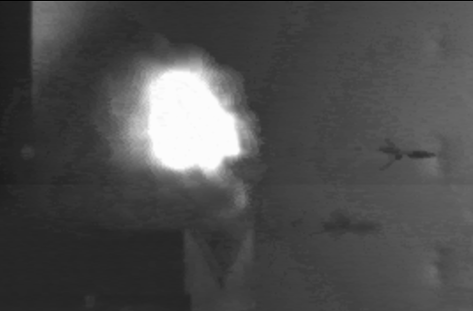
FPPD subsequently produced and delivered 7.62mm, .338, and .50 Cal sabots based on both the Army’s design and FPPD’s design to the Army for testing, and the Army’s test results confirmed that FPPD’s innovative sabot design performed much better than all other sabot designs tested. The slow-motion videos clearly showed that the bullet and sabot are separated smoothly after exiting the barrel.

By minimizing the aerodynamic turbulence, FPPD’s new saboted ammunitions can ensure the bullet maintains a more stable and predictable trajectory after leaving the barrel. As a result, the Army’s test results also further confirmed that the projectile in the .50 Cal saboted ammunition can hit a target 2 miles away.
With the collaboration of the Army’s RDECOM-Armaments Center, FPPD is proud to develop the innovative sabot design and high-performance plastic material solutions that directly address the needs of USSOCOM and enhance the effectiveness of sniper operations.